
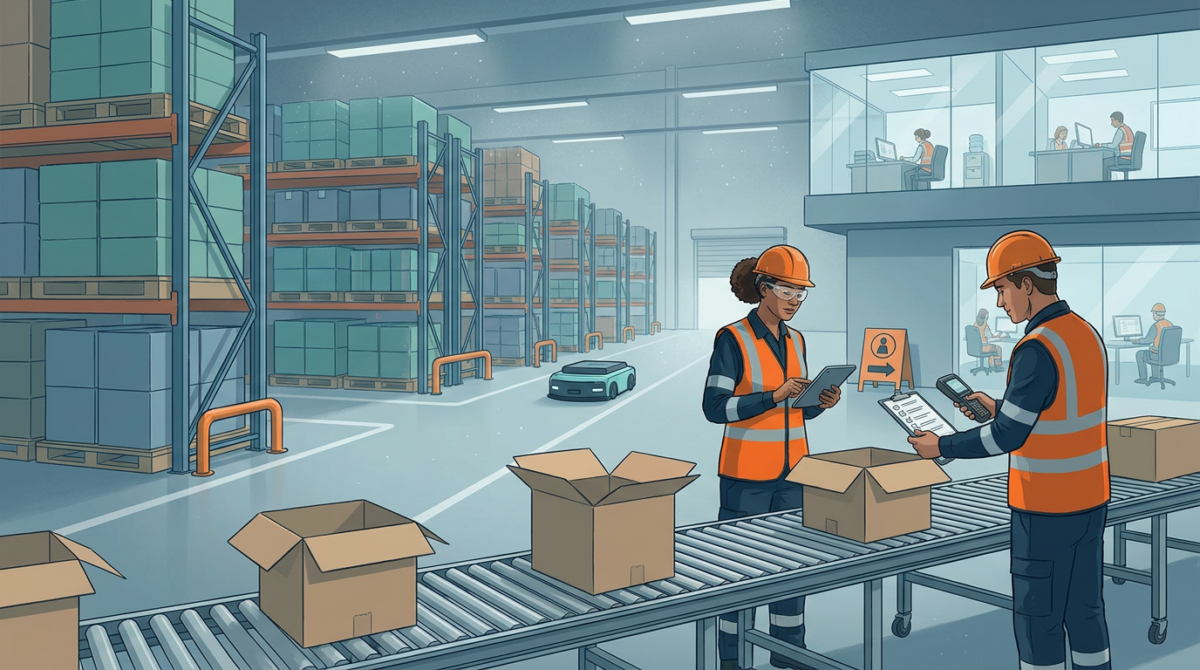
A strong goods-in inspection stops bad stock from entering your site. First, you must catch supplier errors at the dock door. Doing this stops them from hurting your whole setup. Therefore, getting this key step right saves time. It stops costly returns and keeps your clients happy.
Why a structured warehouse receiving process matters
A messy warehouse receiving process creates deep chaos later. For example, if you accept broken goods, you cannot sell them. Consequently, your firm wastes money and space storing useless items.
Moreover, strict intake logs help you meet strict rules. Under UK GAAP, firms must report true stock values. Thus, reliable goods-in checks ensure your money records stay correct.
What to check at goods-in
Warehouse bosses often ask what to check at goods-in to boost speed. Initially, receiving staff must check the delivery papers against the first order. Next, they should check that physical item counts match the supplier note.
In addition, you need to check the outer boxes for clear transit damage. Crushed boxes often hide broken contents inside. Therefore, warehouse staff must move odd pallets right away. This stops them from entering active stock.
The standard goods-in inspection procedure
Setting up a clear goods-in inspection procedure keeps your team on track. First, set up a strict receiving bay just for new arrivals. As a result, incoming stock will never mix with outbound buyer orders.
After that, define exactly how to inspect incoming stock step by step. Staff should count single items, check product barcodes, and note any faults. Furthermore, you can speed up this flow by improving goods-in processing time.
Performing a receiving quality check
A strict receiving quality check goes far beyond a simple count. In practice, your team must assess the physical state of the items. For instance, food sellers must check expiry dates and heat logs closely.
Similarly, handlers should look for proper hazard labels on chemical drops. The Health and Safety Executive (HSE) expects strict rules for packing unsafe goods. Consequently, missing safety labels must spark an instant rejection at the dock.
Frequently asked questions
How long should an inspection take?
Ideally, your inspection should take less than two hours per normal drop. However, highly complex loads may need much more time. Ultimately, you must balance speed with total accuracy to stop later errors.
Do we need to inspect every single incoming item?
Usually, a full check of every item is not needed. It is often far too slow for active sites. Instead, many UK warehouses use random samples to test a small batch. If the random sample passes, workers gladly accept the whole pallet.
Who holds responsibility for damaged deliveries?
Generally, the carrier or the supplier holds blame if goods arrive damaged. Therefore, you must note any clear damage on the paper before signing. Otherwise, you might struggle to claim money back later.
Conclusion
A solid goods-in inspection forms the basic root of excellent stock control. By stopping errors at the dock, you protect your site from ongoing faults. This also protects your business from lost profits. Review your current checking process today to fix any gaps. Equip your team to handle new drops well.
