
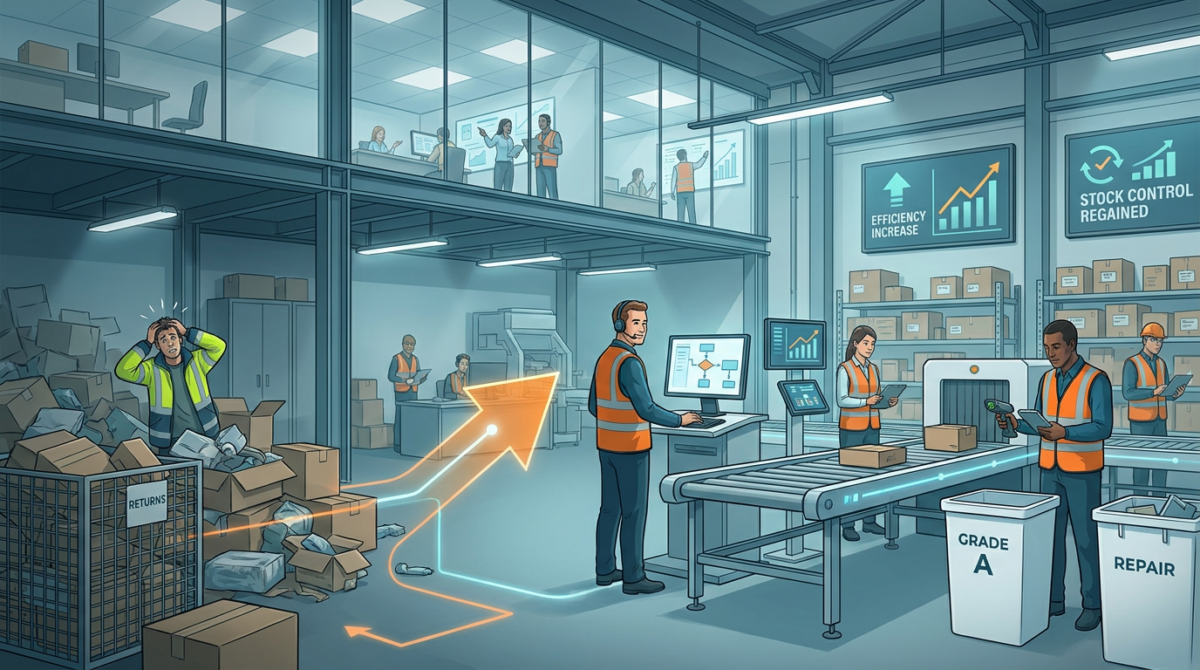
Customer returns often cause big headaches for warehouse teams. In fact, a bad warehouse returns process drains profits. It also clutters your valuable floor space. Therefore, you must get this system right to protect your profits.
The true cost of poor warehouse returns management
Handling returns costs UK firms billions of pounds (£) each year. For example, the British Retail Consortium often warns about online returns. They put huge pressure on profit margins. As a result, managers must treat returns just like outbound dispatch. Furthermore, UK GAAP rules require accurate stock values. You must account for broken or old items properly. However, many sites still push returned pallets into a corner. Then, they simply ignore them.
How to design a flawless warehouse returns process
You need a clear plan before items reach the loading bay. First, set up a strict quarantine zone for all incoming returns. Space management is key for both small firms and huge sites. As a result, staff will not mix unchecked items with good stock. Moreover, clear zones help staff check items safely. This aligns with HSE guidelines on manual handling.
Next, give your best staff the job of checking these items. They must quickly decide to restock, repair, or scrap the goods. If you lack product details here, consider fixing bad warehouse data at the source. This prevents costly delays. Ultimately, good data speeds up customer refunds. It also makes your stock easy to see.
Steps for returns processing in warehouse operations
A good goods return process needs strict procedural steps. First, scan the inbound tracking barcode to log the arrival. Many modern sites use hand scanners to speed up this first step. Then, open the box. Check the contents against the original order details. Unlike standard goods-in, you must grade the item's condition by hand.
After the inspection, you must update your system right away. Consequently, your software instantly flags the item as active or on hold. Finally, move the item to its right location. This could be a picking shelf or a recycling bin. Careful returns stock control stops bad goods from bloating your stock values.
Using technology to improve returns management
Software plays a big role in handling returns today. For example, a robust warehouse management system tells staff where to place graded items. Furthermore, using barcode scanners removes manual typing errors. As a result, managers gain real-time visibility over returned inventory levels.
Frequently asked questions
How to process returns in warehouse environments without slowing dispatch?
The best approach is to physically separate your inbound returns team from outbound dispatch. Furthermore, you should process returns during quiet hours. This balances the workload. As a result, your team hits daily shipping targets while clearing the backlog.
How to handle returned stock that requires repairs?
First, isolate the broken items in a dedicated staging area. Next, compare the repair cost against the item's retail value. If the repair costs wipe out the profit margin, you should scrap or recycle the product instead.
What makes a good warehouse returns process?
A good system relies on speed, accurate grading, and clear rules. For instance, staff must know exactly where to place an item after checking it. Therefore, documented procedures and regular training are vital. They keep the system highly efficient.
Conclusion
Fixing your warehouse returns process takes time. However, the financial rewards are massive. Indeed, a smooth system wins back lost revenue. It also keeps your facility highly organised. Start mapping out your reverse logistics flow today to see immediate improvements.
